
LED Cube
A mini-experiment with a 4*4*4 LED cube controlled by EEG data to create an light sculpture that affects the ambience of a space.
01: The Cube
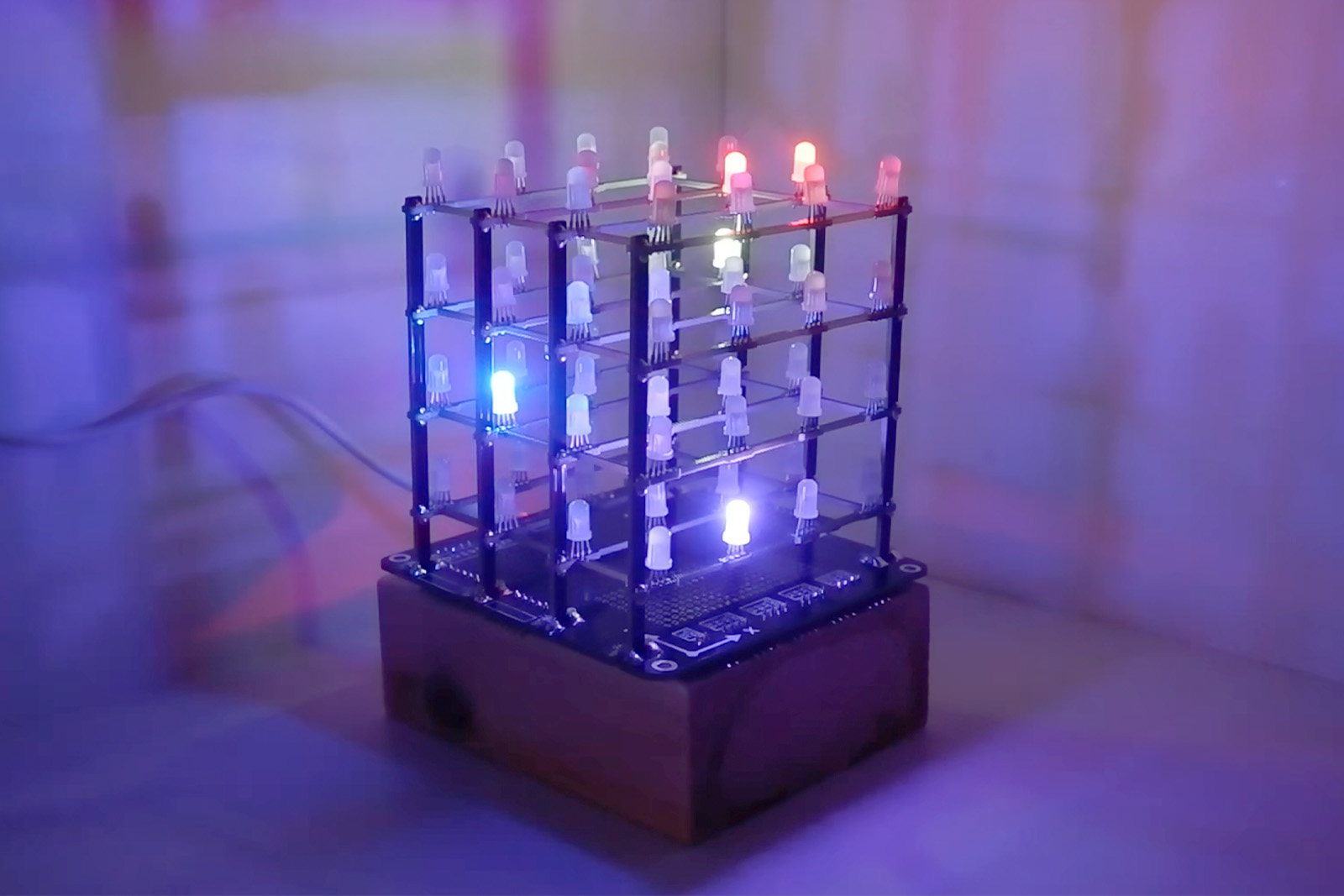
Light sculptures, as an artistic medium, can transform the ambience of spaces. This experiment explores the potential of a 3D LED cube to generate an ambient and mindful experience from EEG data.
This LED cube consists of a 4 × 4 grid with 64 LED bulbs, copper wiring, and an Arduino Uno for control. Initial efforts involved designing and wiring a single-color LED cube. Soldering was involved as well.
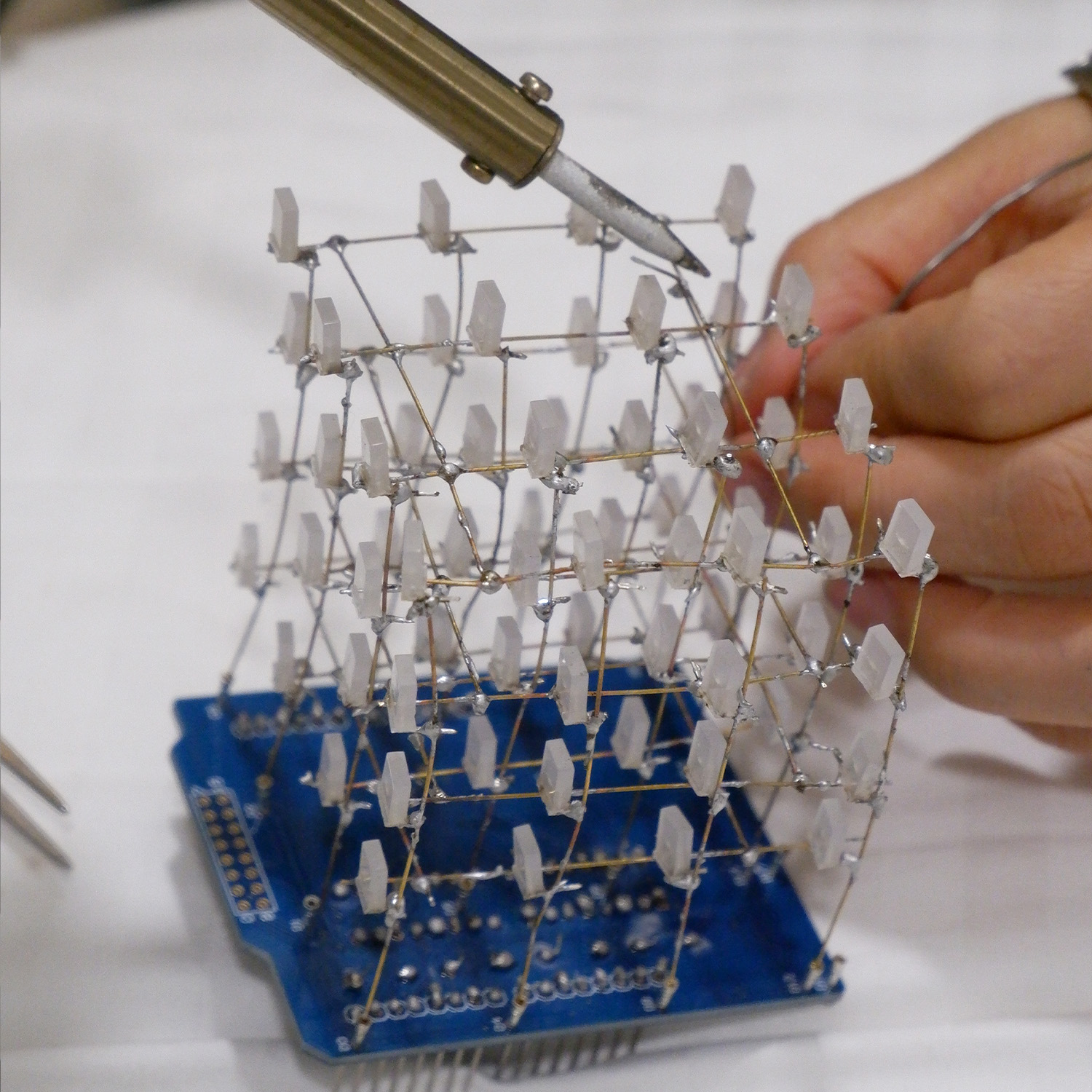
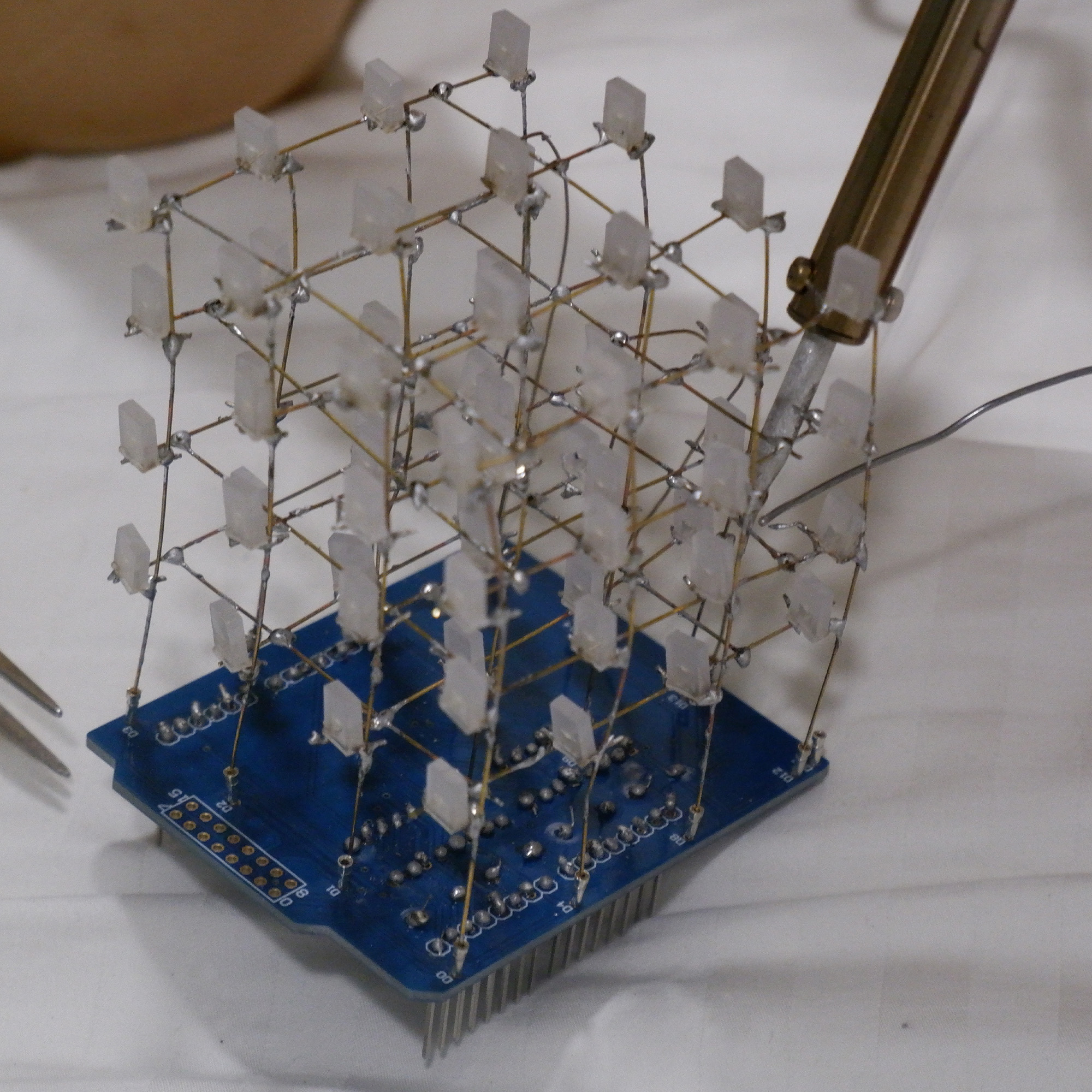
Although the lights were functioning correctly, I realised during calibration that it was a single
colour LED, so I moved on to an RGB cube with a more straight forward, plug-in setup.
This was to experiment with multi-color calibration.
Each layer of the cube represents a specific brainwave and corresponding color, and in the order of
consciousness (top) to the subconscious (bottom). The colours were chosen based on widely accepted
colour symbolism:
- Beta (Red): Focus and concentration.
- Alpha (Yellow): Calmness and relaxation.
- Theta (Green): Meditation and creativity.
- Delta (Blue): Deep rest and introspection.
02: Calibration
There are again two versions for the specific calibration. The first version limited the active LEDs per layer to two, based on data from two brain regions. The result was minimal flickering that cast abstract, dynamic shadows, highlighting the cube’s grid-like structure. This approach offered a visually appealing, artistic representation of brainwave responses.
In the second version, the number of illuminated LEDs per layer increased proportionally with the intensity of the corresponding brainwave. This version created a fuller, more dynamic display, offering a direct visual mapping of brain activity.
After a casual user testing, it was found that participants preferred version 1, finding its minimalism and distinct flickering lights more intuitive and engaging. The interplay of light and shadow added an artistic depth to the installation, making it easier to perceive and appreciate brainwave responses.